
Motorcycle Dent Repair in White Bear Lake for cosmetic damage to tanks and panels without full repainting
Precision Repair for Curves and Factory Finishes
One Up Dent Repair provides Motorcycle Dent Repair to riders throughout the Twin Cities area who need dents removed from fuel tanks, fenders, and side panels without repainting the entire surface. You may have tipped your bike in the garage, dropped it in a parking lot, or struck an object on the road, leaving a visible dent on a curved metal surface that is more prominent than damage on a flat car panel. The repair process uses specialized tools designed for tighter curves and smaller surfaces, maintaining the original paint and factory finish whenever the clear coat remains intact.
Motorcycle tanks and bodywork present unique challenges because the metal is often thinner, the curves are more pronounced, and access points are limited compared to automotive panels. The technician works carefully to reshape the dent without overstressing the metal, using rods with smaller tips and more precise control to match the contour of the tank or fender.
Schedule a consultation to review the damage on your tank or panel and confirm whether the dent can be removed without refinishing the paint.
What Makes Motorcycle Dent Removal Different
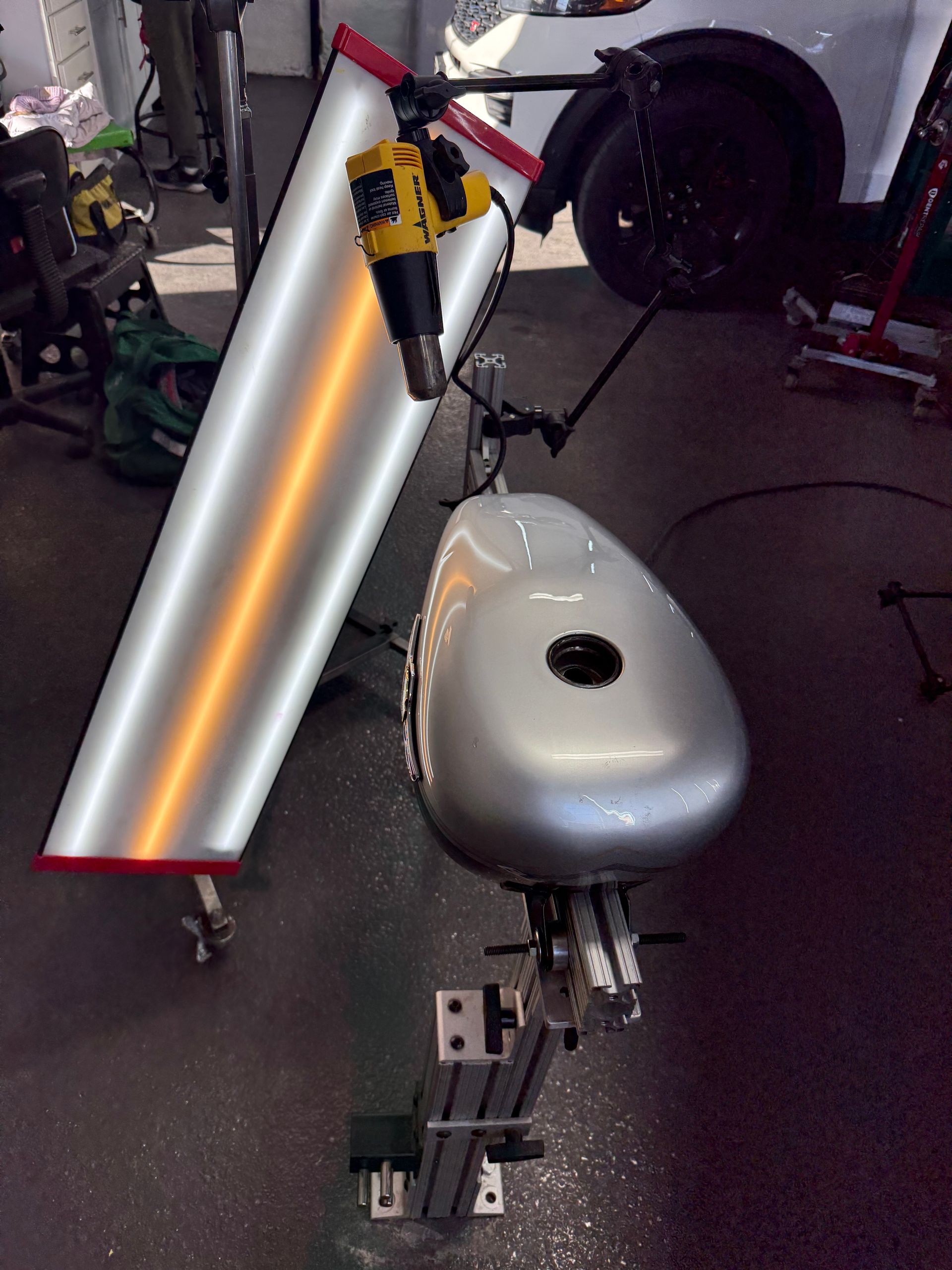
You bring the bike in or remove the affected component, and the technician inspects the dent under focused lighting to assess depth, curvature, and access options. Removal involves inserting narrow rods through fuel filler openings, mounting points, or by temporarily detaching the tank, then applying controlled pressure from behind the dent until the metal returns to its original shape without flattening the curve.
Once the repair is finished, the dent is no longer visible when you view the tank from the side, and the factory paint remains unbroken with no evidence of bodywork. One Up Dent Repair handles the removal with attention to the bike's specific geometry, avoiding over-manipulation that can create new low spots or distort the panel's intended contour.
The method works best on tanks and panels where the paint is intact and the dent is shallow enough to reshape without stretching the metal beyond its limit. Deep gouges, cracked paint, or dents located on compound curves with no access points may require traditional bodywork, and those limitations are explained during the consultation so you understand what the repair can achieve.
Questions Riders Ask About Tank and Panel Repair
Motorcycle owners across the metro often ask how the process differs from automotive work, what access points are used, and how long the repair takes.
What types of motorcycle damage qualify for paintless repair?
You can repair shallow dents on tanks, fenders, and side panels where the paint remains intact and the metal has not been torn or deeply creased.
How does the technician access the back of a motorcycle tank?
Access is gained through the fuel filler opening, mounting bolt locations, or by removing the tank from the frame temporarily, depending on the bike's design and the dent's location.
Why is precision more important on motorcycle panels than car doors?
Motorcycle tanks and fenders have tighter curves, thinner metal, and more visible surface area relative to their size, so even small errors in pressure or tool placement are more noticeable.
When should I repair a dent on my bike instead of leaving it?
You should repair cosmetic dents if you plan to sell the bike, want to maintain its appearance, or need to prevent moisture from reaching any areas where the clear coat has cracked during impact in White Bear Lake's seasonal freeze-thaw cycles.
How long does a typical tank dent repair take?
Most single-dent repairs on motorcycle tanks take one to three hours, depending on access difficulty, dent depth, and the curvature of the surface being reshaped.
If your bike has a dent on the tank or a body panel and you want to avoid repainting, contact the shop to review the damage and confirm whether paintless methods will restore the surface.